

Transit Feasibility & Planning Studies
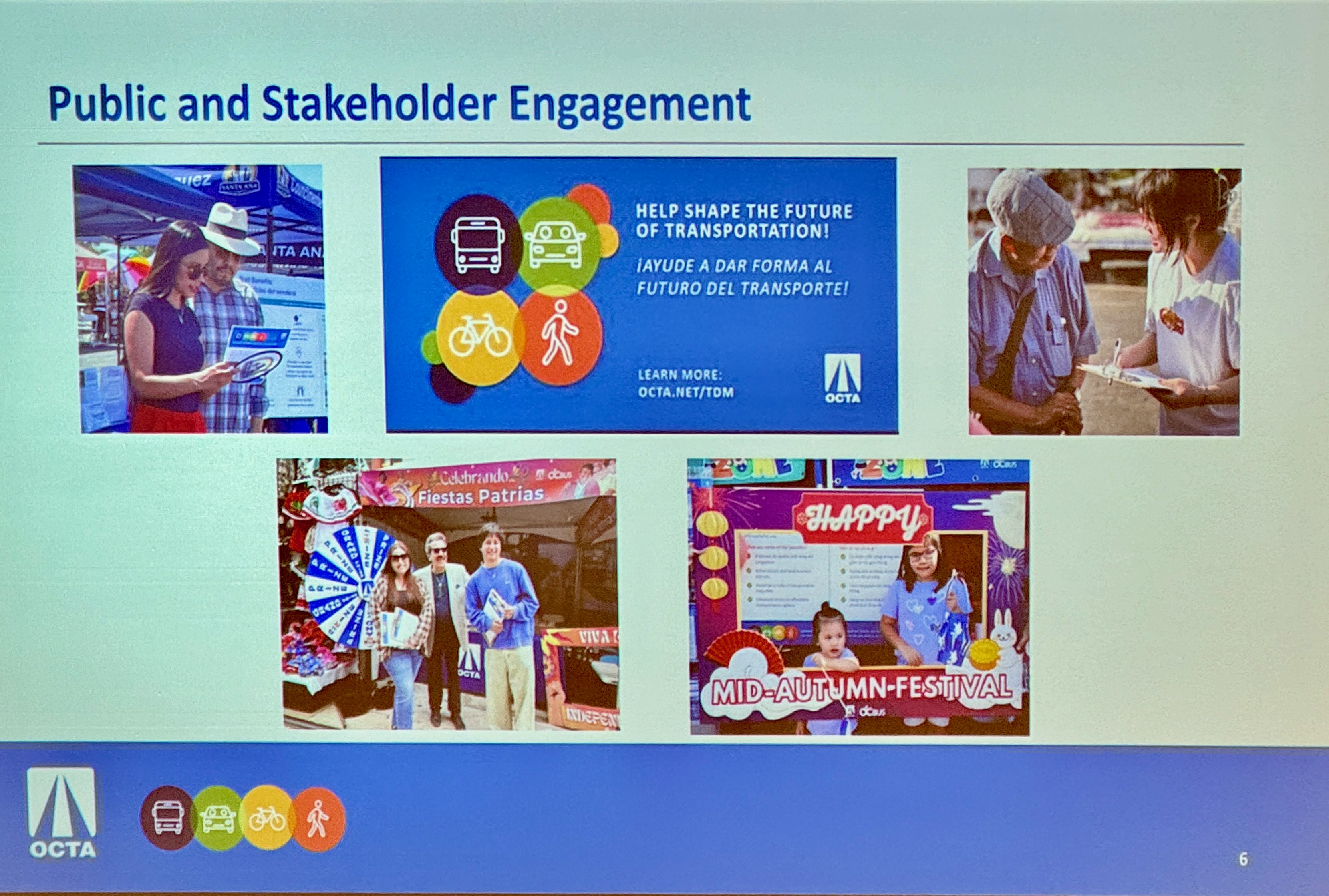
Generating public awareness and gaining public input on transportation studies, projects, and services in Orange County
Overview
ArrowGTP supports public outreach for a wide range of transportation planning efforts across Orange County. These studies help agencies evaluate future mobility needs, identify community priorities, and shape long‑term investment decisions. Our work spans feasibility studies, master plans, long‑range planning, and voter‑mandated transportation programs.
Projects we have supported include:
- Caltrans FRAMES
- Countywide Transportation Demand Management Strategic Plan
- Orange County Transit Vision Master Plan
- OC Connect
- Fullerton Park and Ride / Orangethorpe Transit Village Conceptual Study
- Long‑Range Transportation Plan (LRTP) — Directions 2050
- Measure M2 Transportation Improvements
- OCTA 2025 Next 10 Delivery Plan Update
Goals
The goals of these studies aim at achieving the following objectives:
- Stakeholder Awareness — Ensure widespread dissemination of information across Orange County.
- Clear Technical Communication — Translate complex planning concepts into accessible public messaging.
- Inclusive Engagement — Reach underserved, multilingual, and hard‑to‑reach communities.
- Cost‑Effective Outreach — Tailor methods to the type of input required.
- Community Relationship Building — Engage leaders, businesses, and interest groups.
- Public Feedback Collection — Gather diverse opinions, concerns, and ideas.
- Planning Process Education — Help the public understand long‑range planning, funding programs, and project development.
- Long‑Term Mobility Planning — Support outreach for the LRTP, which guides transportation investments through 2050.
- Funding Transparency — Communicate how Measure M2’s voter‑approved sales tax supports freeway, street, transit, and environmental improvements.
- Next 10 Delivery Plan Awareness — Inform the public about project progress, schedules, and major milestones through 2035.
Approach
We meet these objectives through a variety of multicultural methods:
- Pop‑ups & Workshops — Co‑organize public events countywide.
- Promotional Activities — Handouts, ads, surveys, and email campaigns.
- Multilingual Staffing — Provide in‑language support at events.
- Copywriting & Translation — Multilanguage print, digital, and geofencing content.
- Canvassing — Distribute flyers and materials in neighborhoods.
- Mailhouse Support — Prepare and send outreach mailers.
- Interpretation — One‑on‑one briefings with staff, community members, and businesses.
- Digital Content Translation — E‑blasts, infographics, fact sheets, and social media.
- Outreach Reporting — Phase reports, findings, and documentation.
- Virtual Engagement — Support online community meetings, multilingual webinars, and digital surveys.
- Long‑Range Planning Education — Explain LRTP goals, timelines, and how public input shapes the 2050 vision.
- Funding Program Awareness — Communicate Measure M2’s role in delivering freeway, street, transit, and environmental improvements.
- Milestone Communication — Highlight Next 10 Delivery Plan progress, including completed segments, construction updates, and future phases.
Services
- Multilingual Public Outreach — Pop‑ups, workshops, meetings, and countywide events.
- Technical Communication Support — Clear messaging for complex planning topics.
- Targeted Community Engagement — Strategies for underserved groups.
- Multichannel Promotional Materials — Print, digital ads, surveys, and multilingual content.
- Comprehensive Outreach Reporting — Summaries, findings, and documentation.
- Long‑Range Plan Outreach — Support public meetings, surveys, helplines, and multilingual webinars.
- Sales Tax Program Communication — Explain Measure M2 benefits, timelines, and project delivery commitments.
- Next 10 Delivery Plan Updates — Communicate progress on freeway segments, environmental mitigation, and transit improvements.
Results
Through these collective efforts, we are able to achieve measurable results for these studies.
- Increased Public Awareness: Community members have become more informed about the project, service, or initiative.
- Improved Community Engagement: More participation in meetings, surveys, and other outreach activities is observed.
- Diverse Feedback: A broad range of opinions, concerns, and ideas are gathered, helping to identify community priorities and potential issues.
- Strengthened Relationships: Establishing ongoing connections with community leaders, local businesses, and government officials can lead to stronger partnerships.
- Enhanced Transparency: Public outreach efforts demonstrate transparency and help build trust between the organization and the community.
- Increased Support: Multilingual support is available to the general public and stakeholders
- Refined Strategies: Feedback from outreach efforts helps refine communication strategies, project designs, and service implementation.
- Better Accessibility: Continuous outreach efforts to underserved or hard-to-reach communities to help ensure that the project is inclusive and benefits all segments of the population.
- Documentation of Public Opinion: Collection of official records of public comments, suggestions, and concerns provides valuable data for decision-making and future reference.
- Improved Project Outcomes: Incorporating public input leads to better alignments with community needs, increasing success and long-term impact.
- Long‑Term Vision Alignment — Public input helps shape Orange County’s transportation vision through 2050.
- Funding Readiness — Outreach supports inclusion in SCAG’s RTP/SCS, positioning projects for competitive funding.
- Measure M2 Delivery Confidence — Public communication reinforces trust in the 30‑year voter‑approved program.
- Next 10 Progress Awareness — Community understanding of freeway, street, transit, and environmental improvements through 2035.